A Digital Team of 8 AI Agents: Knowledge Graph, Team, Engine
A digital team doing the outreach, follow-ups, meeting notes, and content - while the humans focus on deals. The three layers that make it work: a knowledge graph that maintains itself, 8 agents with exactly one job each, and the engine of schedules, triggers, and webhooks that ties them into a team.
Key takeaways
- The knowledge graph is a Wikipedia for the business that maintains itself - an agent health-checks it hourly, fixing orphan pages, stale info, and broken links. And that's using maybe 30% of what it can do.
- 8 agents, one job each: the prospecting agent's research dossier took 30 minutes per prospect by hand - now it's minutes, automatic. When a prospect replies, the sequence stops and a human takes over.
- The engine makes it a team, not tools: a lead comes in, a webhook fires, agents hand work to each other - and everything reaches the phone as Slack drafts to approve over morning coffee.
Full transcript1,697 words
Have you ever wondered how you can scale your business without hiring more people? Is that a dream of yours? Imagine a team around you doing the work that you dreamed of. Outreach, follow-up, taking notes, creating content, while you focus on the deals and the stuff that matters.
We've spent the last year building exactly this. A digital team, agents working together to build a business. And you can do this, too. So, by the end of this video, you'll understand three things.
One, what a knowledge graph looks like. Two, what an agent-driven team looks like. And three, what an engine looks like that can build your business. For those of you who don't know me, my name is Mike.
I spent 20 years selling into big tech enterprise. And through that experience, I learned that bottlenecks mean lost time and lost revenue. So, now we combine AI and automation to help businesses grow. If you're interested in connecting with me, click the link below and let's get connected.
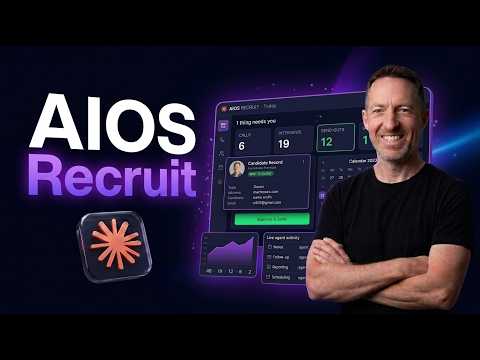
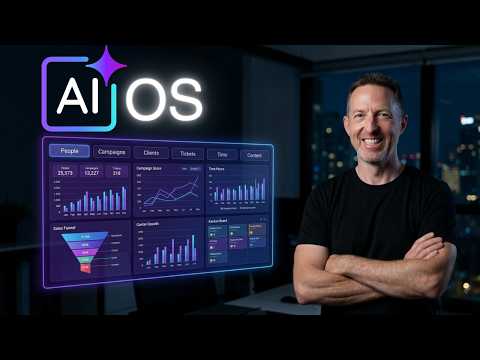
Now, let's get into it. This is DynaFlow AIOS. One single platform where the entire team lives and works. This is the dashboard.
Think SpaceX mission control. One screen and we can see everything. Every agent, every automation, CRM, email, calendar, Slack. All connected and visible in one SpaceX type command center.
So, instead of having 10 tabs open, you'll have everything in one place. If something critical comes up, it's here and you can see it easily. Let's dive into the three things I was telling you about. Knowledge graphs, agents, and engines.
This is the knowledge graph. The easiest way to think about it is that it's a type of Wikipedia, a digital Wikipedia, for your business. It's It's indexed digital library that's connected through a web of relationships. Every meeting, client, contact, project, deal, it's all here connected through relationships.
For example, when an agent needs context or information, or you need to ask yourself the following questions. Who is this person? What did we commit to? What action do we need to make or take to move this forward?
It's all read from a single knowledge graph. And this is how our agents, which we'll get into later, communicate in our voice. Everything is connected, so the agents understand our business. And you know what?
The cool thing is it maintains itself. Every hour a system runs what we call a health check. Orphan pages, stale or old pages, missing links. Let's call it a health agent.
It will go out and find this stuff and fix it. Now, honestly, like truthfully, I'm only using about 30% of what this knowledge graph can do for our business. I don't fully understand the true potential of Obsidian fault Excuse me, the true potential of Obsidian knowledge graphs yet, but it's already changed the game in terms of how we operate. This is the team.
Now, the part that you came for, the eight agents. One running a single function. So, one agent for one function. Excuse me, one agent for one function, so it does it correctly.
This is my prospecting agent. Before anyone hears from us or gets an email or WhatsApp from us, this agent builds a dossier for us. Who the company is, what they do, where the bottlenecks and the problems might be. The agent goes out and finds this stuff for us.
And then the agent will draft the first email. That used to take me like at least 30 minutes per prospect, and now it happens in minutes automatically. This is our follow-up agent. It monitors deals for when like things go quiet.
The agent will check into this and draft a follow-up. And when a prospect replies, it actually stops the sequence and draws a response. But we we it's a human-guided response though. So, we'll jump in at this point and actually edit and send the response.
So, we've got humans working with agents, but humans are in control and making the final decision. This is my relationship agent. It goes out and finds people we already know and drafts a personal reconnect, a real note in my voice, one note at a time. I'd like to just quickly pause and say if this sounds interesting to you and if you would like this in your business, click the link, book a 15-minute meeting with me via my Calendly.
I'll get into very broadly and high-level what's going on in your business, understand what the bottlenecks are, even come up with a basic game plan for moving forward. I guarantee it'll be a good 15 minutes of your day. This is our networking agent. Same idea, but only for people I've met in person at events or on Google Meet.
It pulls context from meeting notes and will draft a follow-up. All automated, the agent does all this in the background. This is our meeting scribe agent. Every call gets summarized in our format and then important points get pulled out, put into the knowledge base, and agents use this stuff as well to follow up.
This is the content agent. This is really cool. It turns real work, client wins, meetings, things we've shipped into LinkedIn and YouTube content, like you're seeing today on YouTube. It drafts the actual content and it works from things that we're actually working on, projects that we're actually working on, things that worked and sometimes things that didn't work because I know you as a a business probably want to know that.
That's probably the most important thing. Actually, as I said earlier, this video started from one of those agents. And this is our operator agent. This is the one that I can talk to in Slack or Claude code.
And so, the agent will send me information and then I can reply to the operator Excuse me, I can reply to the operator agent. We can have a type of conversation. For example, I could ask what's in my pipeline today? What are we working on today?
Who are my hot leads? What's going sideways? These kind of things. We can talk to the agent, get the information, and it will answer and hand that information over to another agent that will do the work.
So, the agents are talking to each other in the same way that humans would talk to each other or the team would talk to each other. " There's a link below. Click the link, book a 15-minute meeting. We will specifically discuss your business and your bottlenecks.
We'll figure out what's not working, and we'll sketch out a roadmap for success. It'll be a good use of your time. Okay, moving on. This is the engine.
This is really cool. Here's what makes it a team instead of just a set of tools. Schedules, triggers, and webhooks. Every agent runs on a routine Excuse me, every agent runs on a routine automated.
Prospecting, follow-ups, reconnects, librarian. A lead comes in from the website or from YouTube, a webhook will fire, and the research agent will take action and send that information to the prospecting agent. And then the prospecting agent might send that information back to the research agent. Eventually, it will get to me with a fully formed draft email.
Like, for example, do you like coffee? Because if you do, you can wake up in the morning, drink your coffee, check your briefing. It'll be waiting for you. And you'll see today's meetings, today's uh pipeline, decisions that need to be made, all teed up and ready for you in one place.
An outbound agent will send all of this stuff, and this all happens through the engine. All right, one more thing, and this might be the most important part. This is the interface between the team and the real world. Emails, updates, posts, it all goes to my iPhone as drafts, and it's all in here in one place, my mobile phone.
So, we get the leverage of a team working around the clock, and all the content that gets sent to clients is done in our own voice, hyper-accelerated by automation and agents. And we make the call. And so, this all happens in Slack. Wake up in the morning, you drink your coffee, you check your Slack, and you can see everything that's going on in one place.
This is also really cool from when you're out on the road or on vacation or something like this. You can see your business completely automated, and you can see the agents talking to each other. We currently call this the magnificent eight, the eight agents that we just discussed today. The The eighth one is the librarian, which I didn't go into detail with, but it's a a knowledge graph that maintains itself.
It's an engine that powers our business, and it's a single mobile interface into Slack that we can use to make decisions from, which at the end of the day what this is all about, you know, helping us help you save time and make money. So, here's what's changed for us. Exponential amount of follow-up emails to clients, an exponential amount of research briefs for new clients and new business, and a parabolic amount of new business via things like meeting notes and recaps, where we can extract that information, it will get sent to the knowledge graph for connections and contacts, and then agents can grab that to do research to develop more business. It's like a virtual cycle running through the system.
The bottom line is if you run a business and any of this resonated and you think that you could benefit from any of this stuff, click the link below. Let's book a meeting. Let's get connected and I'll tell you straight whether this would work for you. It probably would.
Anyway, leave a comment in the comment section. Don't forget to subscribe to my channel and I'll see you in the next one.
Auto-generated from the video's captions and lightly edited for readability. Commercial terms are covered on a call, not here.