Agentic Recruiting: One AI System That Runs the Whole Recruiting Platform
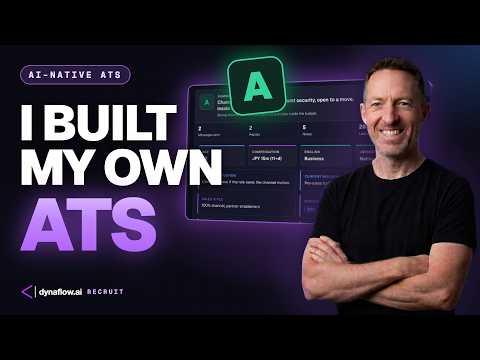
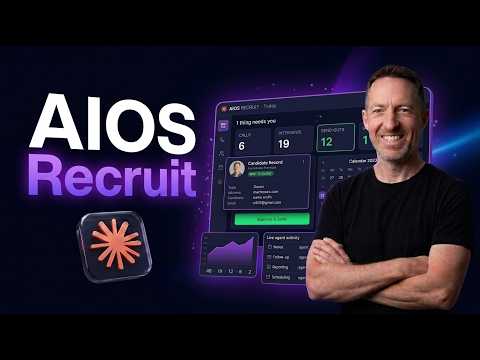
A recruiter's tech stack is usually five or six tools that do not talk to each other: the ATS, LinkedIn, phone contacts, email, folders of CVs, spreadsheets. Pulling one recruiting strategy out of that took a full day. Dynaflow Recruit replaces the stack with one AI operating system: agents that share what they learn and take action on a single platform, with the recruiter reviewing and sending. The video opens with a live demo of three agents turning a candidate's remark on a call into a researched lead and a drafted message to the hiring manager, then walks through the whole platform: Home, Companies, People, Jobs, and the API and MCP endpoint that let an outside agent work the system under its own token.
Key takeaways
- Agents, not chatbots: a lead agent reads call notes every hour and creates the lead with its source, a research agent finds open roles, headcount and the hiring manager with sources, and a content agent drafts the first message in the recruiter's voice. Nothing sends on its own.
- One record per person, candidates and clients alike: 13,000 people in one index, with the signals that make a call list (reply waiting, open but on no job, tagged but never contacted) generated from the data instead of typed.
- The platform is AI-native from the outside too: a REST API and an MCP endpoint with a tool allowlist and an audit log per token, so an outside agent can add ten candidates to a live job in three minutes and still cannot delete, move a stage or send anything.
- How it thinks: your own network first, your own voice, it never makes things up, human guided. Your data stays in your system, not inside somebody else's product.
Full transcript3,647 words
We built an AI operating system that runs an entire recruiting platform end-to-end. But what does that even mean? A recruiter and her tech stack generally run on five or six disparate components. For example, ATS, LinkedIn, phone contacts, emails, folders of CVs, spreadsheets, this type of thing.
Speaking through years of experience on the above disparate stuff, it took me an entire day to put together a cohesive recruiting strategy. It was exhausting. What I'd like to show you in this video is three things. One, the problem.
Two, how to solve it. And three, how you can make money, save time, and implement this into your business. But to solve this, we need to ask some questions around what is, I think, a nebulous problem. For example, how do we make the requirements less silly?
How do we delete unnecessary parts of the process? How do we optimize for speed and efficiency? And how do we then accelerate and optimize? Does this sound familiar?
Comment in the comment sections if you know where I got this from. Part of the solution is to add AI into every component of the system. Build agents that are fully integrated and communicate with each other. Not just chatbots on top of your ATS or your CRM.
But integrated agents communicating, sharing information, and taking action on a single platform. But it's easy to talk about this, harder to do. So let me show you a quick demo. One thing I love to do as a recruiter is develop leads from conversations.
For example, you're speaking with a candidate and he mentions a company that he has respect for. And he could potentially see himself working at. That could be a potential lead. This, of course, needs to be done in an ethical and fair business way within the parameters.
And also could be applied to any sales process. Okay, quick demo. Dynaflow Recruit. We're in the company section where the candidate intel and new business development leads are displayed.
So we have clients, former clients, prospects, and leads. This is all via a candidate interview. So here are specific companies and actual leads that came out of the conversations. And this is all completely automated through AI agents.
Let's look at an active lead. This lead was developed on Tuesday. I spoke with a candidate. He mentioned a company he was interviewing at.
The position is head of sales. Interestingly, I didn't know the company, but it sounded like a good lead. And I built a system where the agents can check this stuff, do research, and come back with actionable intel. So how was this developed?
Every hour, an agent reads meeting notes and processes them. The agent scans and detects for keywords like hiring, lead, new, interview, this type of thing. So here we can see the lead, the intelligence, and the source. And it's linked to the candidate so we can see the source data.
Everything is confidential. Obviously, we want to be cool and protect our sources. And the agent knows this. So now you can start to see how a recruiter can work alongside agents to extract extremely valuable intel and optimize to take massive action.
For example, writing a custom message to a hiring manager. A super intelligent agent that we built will go ahead and do deep research on the lead. For example, the agent will check open roles in Japan, hiring managers, headcount, open sources, verifiable intel. This in itself is a game changer for time saved.
And we optimize LLM routing for token cost reduction. So here the agent found the actual hiring manager and added them as a contact and passed it off to the content messaging agent. The AI content agent wrote a custom message to the hiring manager that I would write in my own voice. Describes the situation, doesn't make any assumptions, and keeps it cool and confidential.
A nice added touch. It's added my Calendly link for meetings. Here's the compelling part. It's human guided.
So this is only a draft that we can review, edit, and send. So now research and content writing agents are working alongside us. Extract intel. Perform research.
Take action. And write messages. Now, if you want to go full automation, the agent can do absolutely everything. But this is the way that I like to do it.
Not ready to go full Skynet just yet. As you can see, this is a quick process end-to-end where we go from conversation to a custom written message to connecting with an actual hiring manager. This is only one or two agents working in unison. We actually have way more agents working together in the current system.
Technically, you can deploy as many agents as you want, depending on the complexity of the problem. The reason I started to build and why we started to build Dynaflow Recruit was to help us in our jobs, to help us be more efficient, and to help us make more money. So what I'd like to do next in this video is walk you through the entire system and show you how it works and how you can implement something like this in your business. On that note, there's a link in the description.
If you're interested, book a meeting with me. Let's get connected. And I will show you how to optimize, to save time, make money, and shorten that hiring time. All right.
So we're back on the Dynaflow Recruit page. This is the homepage. Going to do a walkthrough and a demo of how this works and how you can build an agentic recruiting system to help you save time, make money, and shorten that candidate hiring time. This is the home screen.
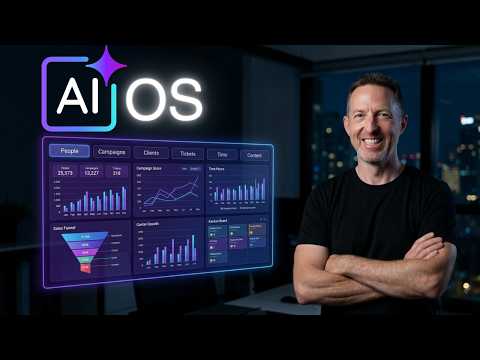
So we've got people, 13,000 people. These are the companies, open jobs, pipeline, profile sent this week, and reply rate. So automatically and immediately, we've got a quick dashboard on the home screen to give us, you know, a dashboard of where we're at in our search and our activities. This is the activity happening, I guess, over eight weeks.
Then here we have jobs. So each funnel, and there's a weighted fee as well. So these are actual jobs that we have open. Kestrel Security for 24K.
Norvane Systems for 25K. And also these purple lines are kind of the progress through the search. And then down here, we have pipeline by stage. We'll go into pipeline in more detail later.
But these are all the candidates and people that are within pipe and where they are within stage. These are the replies, 17 replies, 11 waiting, so on and so forth. And here's a snapshot view of where the candidates work. Now down here is, excuse me, the candidates that we've contacted or touched.
And so that's the home screen and how we can actually quickly get a snapshot view of our business. Let's move next to companies. And so on the top here, again, we love visual. We love dashboard, analytics style ATSs.
So we have built Dynaflow Recruit to give you beautiful visuals immediately on each page. So here we have all the companies in the system. We have researched. These are the agents that are researching leads and companies in this type of thing, which we showed you earlier.
And here are former clients that are hiring. This is very valuable if you're a recruiter. Prospects within each open role, 97. And here are leads from conversations.
So this is actually going into the company section. So Arclight is hiring for a head of sales. Lumera AI is enterprise AI. By the way, you know this, but this is all beta information.
These are not real companies. So I'm not giving away anything here. These are former clients that I'm working with that are also hiring. And again, we got all this intel from people we've met along the way.
And agents have done the research and writing messages. Bluefin Dynamics, a networking company. Saffron Grid, energy software company. Hot Prospects.
Vantor Networks is a hot prospects. And these are the most roles that are open in Japan, which is where I focus. S. or wherever.
And then these are all the companies that are in the system with, you know, what kind of company they are, the sector they're in, open roles, people. So again, you know, even within companies, we've got a very cool snapshot view of our business and our intel. And agents are ready to take action. All right, next.
People. So I showed you in the demo earlier how we can go from a conversation to deep research to a custom written message by an agent and sending that to the hiring manager. A lot of that happens here. So it says one index of everyone you have ever known, candidates and clients on file on the same record.
In Dynaflow Recruit, we don't differentiate between a client and a candidate. They're people. And depending on where you are in your relationship with that person will decide if they're a client or candidate. So we've got, again, 13,000 people, 5,000 people with mobiles, 10,000 of them are on LinkedIn.
And we've got 11 replies waiting. How many ATSs are you working with that have this information? You know, that, oh, wow. Like of all of my candidates, all my people in the system, 10,000 of them are on LinkedIn.
So we've got reply waiting, open, not on a job, tagged, never contacted, and added in 30 days. So if I'm just like looking for leads, I can go in and see, okay, so open but not on a job. Ayumi is open. So we'll go into her.
Actually, let's go back into waiting for a reply. So Naoko, I think, gave us some data and some intel. And this is her. So now we're into the people, actual record.
And so she's an engineer at Bluefin. And she's got, so this is the summary, which is written by AI, which is kind of a snapshot view and like a rating, a scorecard of the candidate or the person. And then timeline, call 18 minutes, talked about the Kestrel brief, interested, wants to know more. What else?
So she is interested in Kestrel. Okay. So that's interesting. And so these leads that we get, like regarding Kestrel, for example, will be picked up by the agent and then we'll get passed over to the research agent.
And then the research agent will do research on Kestrel if we have not already done so. Okay. Next is jobs. So here are all the jobs on the board.
We have, again, more data and analytics. We have the open jobs. We have people in play. We have pipeline value, $80,000 in pipe.
I love to look at this number because, you know, a recruiter or a salesperson, they want to know what's going on with the money. So you can see that at all times. And interviews this week too. So up at the top, channel sales engineer Kestrel.
We have a candidate in interview stage, eight people in process. It's going to be a $54,000 fee and the close rate of 45%, which is not bad. And it's weighted to 24K, which I think is the commission. So that's jobs.
And the next, I think, is pipeline. Now we're into pipeline. All right. So that's home, people, companies, and jobs.
Next, this is cool. Let's go into the tools section. So Dynaflow Recruit is an AI native, AI first ATS. And so you can actually create, excuse me, API endpoints and connect into Dynaflow Recruit via API.
And the way we've designed it is Dynaflow Recruit can be an agentic system sitting on top of your current ATS, or it can be an actual ATS. And then you can connect into it via other applications and tools and this type of thing. So in this example, let's look at the top. These are the API keys.
Keys for API, tokens for agents, endpoints, and receive events. We can create a new key if we want to give to an external tool or an application. We've got a REST API. We've got endpoints for MCP.
So you can also connect tools via MCP. We've got seven events going right now and 210 API and MCP events going on here. So here are all the keys and tokens that we have active right now. The first at the top here is, sorry, Grok Bot, which is an agent owned by xAI.
And so I have actually connected my Grok Bot into my Dynaflow Recruit. And I've set up all of these tools. And you can do two calls from Grok Bot into the Dynaflow Recruit to get information and take action, as we talked about before. The thing I like about Grok Bot, it's really easy to set up and I can use it on my phone when I'm mobile.
So you can see all of the, this is like a log here. So at the top, we've got schema, every object, attribution, vocabulary, plus the guide. Created Daniel Okafor for Vantor Network. So this is all the stuff that Grok Bot has done accessing Dynaflow Recruit.
That's the API endpoint MCP. Let me know if you have any questions in the comments section regarding that. A little bit about the backend. We also have an outreach sheet.
This is working. So let's go into the channel sales. This is kind of a thing that allows you to take action on outreach and actually contacting agents. And I will show you that in another video.
But basically what it does is sets up like a dashboard or a tool for you to automatically copy custom messages and paste them into LinkedIn or another external outreach tool. Like, I guess maybe like Apollo or Lusha or, you know, any ATS, greenhouse lever, this type of thing. All right. That's the long demo.
Let's next go into the ROI and show you how much money you can save on this. Very nice. So that's the ATS walkthrough. Let me know what questions you have in the comment section.
And if you're interested in connecting with me, link in the description, book a meeting, 15 minutes. I will go through your business quickly. We'll figure out the bottlenecks. And I mean, we can even start building live within two or three days and adding value to your recruiting or sales processes.
Dynaflow recruit. What are we going to do here is just show you a quick ROI presentation on how you can save time and make money with this stuff. So the concept, this is what it does and how it thinks. These are the four simple rules of Dynaflow recruit.
So how it thinks, four simple rules. Number one, your own network first. All right. So this is kind of a sovereign AI concept.
And the best candidates are the people that you are, the people that you already know in your network. And, you know, you know them, you've met them, you have a relationship with them. So Dynaflow knows this stuff. You know, we'll bring this information into your system or maybe it's already in.
We'll connect it all up through a type of ontology. And we'll like map out your business and map out the processes and the relationships and start connecting the dots to those relationships. So when we start adding like machine learning to your tribal knowledge of your organization and an ontology on top of that, then we can start like connecting dots and playing 4D chess. Number two, your own voice, how you write, how you speak, how you communicate with people in your network and, you know, for things like business development.
So every message that's created by the agents is custom and it learns. It's a self-learning system. So it will learn from what you wrote and how you wrote it and why you wrote it. And so it doesn't sound like AI.
It sounds like you. And we, you know, we do this through iterations, MD files, markdown and, and system prompts. Three, it never makes stuff up. Hallucinations is a big problem in the AI world, as you probably know.
So within Dynaflow recruit, we design it. So every fact comes from the system and your notes. So, you know, if you meet a candidate and you have notes, the agents will pick that up. And, you know, if it doesn't know, we've prompted it, system prompted and markdown filed it to let the agent know it doesn't know, but it will try and get that information for you or your team.
And for human guided. So again, this is something we've designed so that like the messages get custom written and the research happens and everything gets teed up for you. The AI drafts, you review, you can also edit and then send. So, you know, there's nothing annoying than getting a copy paste from a recruiter or a salesperson that is obviously Claude Code.
I was talking about this with a friend of mine yesterday and it's just, excuse me, it's kind of annoying. It's like, oh, you are not just a recruiter. You are a fantastic recruiter. You're not just covering this region.
You're a robust recruiter covering this region in a really interesting way. So it's so obviously AI written. So we try to avoid that and take careful consideration into custom designs. Human guided, AI written.
Three layers. One, the foundation, which is your data, which we talked about. So everything you already own is yours. Sovereign AI.
One clean record per person. So we don't have clients and candidates confusing sort of like, is this a client or a candidate? We have one clean record, which is the person. Layer three, Dynaflow recruit, which is our agentic ATS, AI native, AI first.
With dashboards, candidate cards, agents, and admin. And so you saw this earlier in the demo. This is an agentic layer sitting on top of the person, on top of the data. And then on top of that, it's you making the decisions.
The agents are doing the research. They're doing the ontology. They're doing the custom messaging. They're managing leads and information for you.
And that's being teed up to you in a very easy to consume, understandable way. So you can make those decisions. It's a private system under your control. We believe deeply in security, confidentiality, keeping things cool.
They're your candidates. They're your messages, your clients. You know, if you're in Europe, we'll make this GDPR compliant. You know, we can't candidate and consumer protection.
We want to make sure that everything is done by the book and through the protocol. So it's just in your system. Your data stays with you. And it's not inside somebody else's product.
And this is really all about AI sovereignty and just making sure that you own your own data. And it's not getting leaked to, you know, other tools or competitors. So what does this do for you? Well, as a recruiter, it saves time.
Seconds, not days. First, to the best candidates. You spend more time in front of candidates and clients instead of on admin. And you make more placements and make more money.
If you're a firm owner or a founder, like you've got the whole business on one page. You can see who is in play, what needs action. You can see all of your revenue, your headcount. You know, if you've got a two or three year company vision, you can keep your eye on that at all times.
And you can tweak and optimize if you're, you know, under or over and make sure that you're heading in the right direction into that goal every day, all the time. And if you're a company or like a TA person or a hiring manager within a company, we believe that Dynaflow Recruit will help you shorten that candidate hiring time, which is really important for companies. They want to scale out their organization, make money. They need to scale out the team faster.
So, you know, you're going to see the right people faster. You're going to have the right conversation first. And from that first candidate identification to onboarding, like that'll be shortened from like, say, for example, from six weeks down to three. So the numbers that matter to you, the old way, this stuff could take one full day.
Everything that I showed you earlier, I won't go into the details again, but it can take a whole day, right? With Dynaflow Recruit, it's minutes. And so, you know, you're going from 10 days and it manned down to three hours. That's exponential.
You're getting nine working days back, which you can use to make more money or spend time with your family. And you are then either saving or making half a million dollars a year, probably making. And that's what you want to do, right? Agentic AI is here.
It's not going to replace you. This is not designed to reduce your team. It's designed to accelerate your team and make you and your team ultra efficient, less admin, more time, more revenue. If any of this resonated, connect with me.
There's a link below. Click the link. Let's get connected. Again, we'll go through your bottlenecks and your problems and start to figure out and build quickly.
We're not about like spending a lot of time on, you know, presentations and this type of thing. We'll get into your business quickly and add value. Thanks. Hope you enjoyed this.
See you in the next one.
Auto-generated from the video's captions and lightly edited for readability. Commercial terms are covered on a call, not here.