AI Candidate Intelligence: The Whole Candidate File, Read Before You Call
Before a recruiter contacts a candidate, what they know is spread across five or six places: the ATS, interview notes, old CVs, LinkedIn, WhatsApp, a notepad. Rereading it all takes time, and the detail that matters, like a 2022 note about a bonus or the compensation on an old CV, gets missed. Recruit Intelligence is an agent in Dynaflow Recruit, an AI-native ATS in beta, that reads the notes, CVs and messages on a person record with one click and turns them into one profile: a one-line headline, an A, B or C rating with the evidence behind it, compensation with its year, results by year, and the confidential part a recruiter needs before the next call, what is wrong at the current job, the timing and the concerns. The video demos it on a fictional candidate, then shows how Mike turns the card into the questions he would ask. Nothing sends: the recruiter reviews the card and makes the decision.
Key takeaways
- One click on an empty card: the agent collates interview notes from 2022 to 2024, a 2024 CV and this month's LinkedIn message into a single record, and lists exactly what it read (five notes, six archive records, one CV).
- The rating is A, B or C, placeable now, placeable with the right role, or weak or the wrong fit, with the evidence beside it: 112% of target on new logos in FY2024, two employers since 2021. Compensation keeps its year (JPY 13m in 2025), so you confirm it is still current before discussing a role.
- The part a recruiter needs before the call: the wound (her territory was split in April), the timing (one month's notice, bonus in March) and the concerns (under target after the split, no reply). Each one becomes a question to ask.
- Where the file is silent, the card says "not on file" instead of guessing. You can correct a field by hand, and the card tells you when the record has changed since the agent's read. The limit is the information on file: if the notes are incomplete, you still ask the candidate.
Full transcript1,602 words
We built an operating system that runs an entire recruiting platform end-to-end. In this video, I'd like to show you a single feature that is often overlooked and I think you can personally benefit from. Recruit Intelligence. For those of you who don't know me, my name is Mike.
I spent 20 years in recruiting, placing technical and sales leadership across Asia. Now I run Dynaflow. We build AI systems for businesses. I still actively recruit and we are building an AI native ATS alongside.
So I know what it takes to recruit and have a good ATS to help you. By the end of this video, you will understand three things. One, what a candidate profile looks like when an agent builds it. Two, how an agent builds it from the information you already have.
And three, what it changes about how you recruit and the decisions you can make. But what is the point in Recruit Intelligence anyway? As a recruiter or a salesperson, you make important decisions every day. Who to call, who to shortlist, what to say, how to manage the process.
Generally, we make these decisions from memory or from tribal knowledge and experience. But now you can use AI to help you make these decisions way faster. But before we get into the solution, what is the problem here? Well, before I contact a candidate or a client, everything I know about them is in like five or six different places.
ATS, interview notes, old CVs, LinkedIn, WhatsApp, my notepad. So we have to reread everything and sometimes we miss important stuff. For example, that note from 2022 that says she will move until she gets her bonus or her old CV with her compensation on it. So we built an agent that can read this information and give it to us all in one place so we can make better decisions.
10 years of notes, CVs, contact exports, LinkedIn, live searches, this type of thing. And the coolest part is for you, it's just one click. You click one button and then the agent turns disparate data into actionable information. So it's easy to talk about this stuff.
Let me show you how it works. This is Dynaflow Recruit. We're on a person record. Fictional candidate, fictional company, but the product is very real.
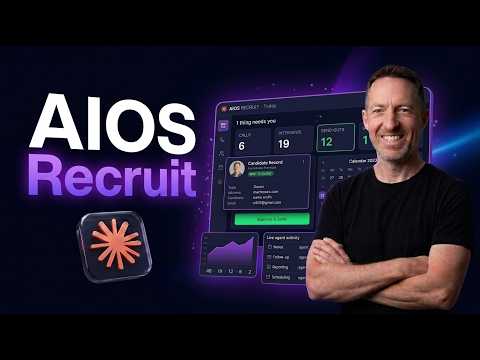
On the right, the Intelligence card, as you can see, its architecture is totally empty. It's an empty shell. No rating, no age, no compensation, no English, no mission, product, sales style, partners, customers, results, no wound, timing, interviews, nada. It's like we have an empty profile, the architecture, but no data inside.
Now, this is the really cool part. You click one button and the agent goes out and starts collating disparate data and creating a dossier on the candidate. It could take some time, but it's totally worth it. The agent brings the information back to you together into a single model call.
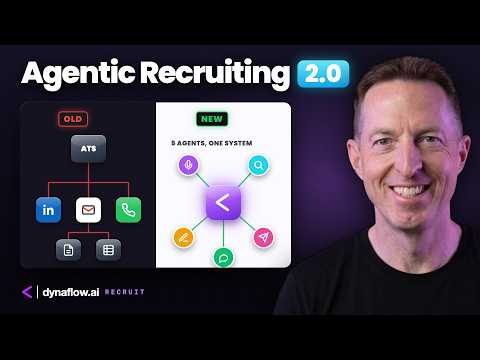
And here's how the agent reads the information and how it works. Interview notes from 2022, notes from 2023, 24, a CV from 2024, a LinkedIn message from recent, this month. This is all disparate data from different years, in different formats, in different systems, all collated now into a single record managed by the agent. This is true agentic recruiting in 2026.
Okay, back to the profile. Now, the profile has turned from an empty shell to a single intelligent profile. And so we can read the profile B-level enterprise AE with network security and cloud product experience selling into manufacturing and retail business English strong hunter type two moves in five years. That one line is the decision B means placeable candidate with the right role.
And the agent tells me exactly what I read five notes, six archive records, one CV. So that's Recruit Intelligence. You can see how this becomes valuable. A card on every person can turn into extremely valuable intelligence to help you make better decisions.
Dynaflow Recruit ATS is in beta right now, and I use it every day in my business. If you want access to this and you want data above your systems, click the link. There's a link below. Book a meeting.
Let's get connected, and I will help you integrate this into your business. Last week, I ran it on a real candidate, an enterprise account manager search, and one answer pulled from three sources already on file, the CV, the LinkedIn, the live stage board. And honestly, it was a game changer. It just helped me action information so much faster.
So let's look at why the agent rated this candidate the way it did. So the candidates rated a B, which means they're placeable, but not an A. And C means they're either weak or a wrong fit. And here's where the agent gave her a B, 120, 112% of her target on new logos in FY24.
Two employers since 2021. That's pretty good actually, but we can check the evidence behind the rating before we decide if she's right. Notice the compensation, JPY 13 mil in 2025. So that's a bit low.
That's a red flag. The agent keeps it on the year. Before I discuss a new role, I want to confirm whether it's still current. And here are the results.
One row per year. I can look at the target, the attainment alongside the candidate's experience. So you can see these results in the profile to make decisions. This is all about you acting faster, making better decisions.
The rest is laid out the same way I'd write a CV or a profile. Product, sales style, partners, customers, results. So it's like an actual candidate profile. But then the second part is the important stuff.
This is the confidential part that you as a recruiter needs to know, the wound, what's actually wrong in her current job. Her territory was split in April and she's not happy. So I'd ask her if that situation has changed, what you need to see in a new role before you'd make a move. We need to know this stuff.
Timing, it says one month's notice, but her bonus is in March. So I'd like to confirm the bonus when it's paid and if that affects the timing of her start date. Concerns in 2025 says under target after the split and no reply. So I'd like to understand what happened with the target and why the accounts moved and whether she's still interested in moving at all.
That's how I would use this, working with the agent alongside the AI to help you use critical thinking to make better decisions. The agent has put the information in front of us. We use critical thinking to make the decisions in the end. In the end, it's our business, so it's our decision.
So if something isn't on file, it will tell you it's not on file. The brief will leave the gap. I can edit something. I spoke to her on the 27th and confirmed.
I can save it. And now it's edited in the system. We can make real-time edits in the system, and that will get integrated back into the AI. The agent will see that.
If the record changes, the agents read the card and tells me a new note or a message. So this is true agentic AI. Your ATS probably doesn't have this stuff in real time where agents giving you information and telling you really important stuff. So how does the agent build all this stuff?
Well, it reads the notes, it adds the CVs, and it goes through everything. It correlates the data and it turns it into valuable information. If you want a more technical deep dive, how it works, leave a comment in the comment section and I will do that. By the way, if you're enjoying this video and you like my content, please share it with your friends.
And of course, please comment, like the video and subscribe. It really helps. And it helps me make decisions on what to drop next for content for you. So what this changes, this is back to the decisions.
I can check whether the candidate fits the search and the role, and we can get closer to an offer stage. And we can also check the timing, the concerns, this kind of thing, the stuff we might not have checked before. The limit is the information that we have in file. That's the only limit that, you know, the type of data that we can collate.
So if my notes are incomplete, we do need to talk to the candidate and ask this, but this applies beyond recruiting completely. Sales, account management, any commercial line job where you need to meet a customer and have information quickly and at your disposal. Thank you so much for watching. I hope this was helpful.
The mission, my mission is to help you as a recruiter or a salesperson identify, screen, recruit and close faster using AI, make better decisions using AI. The point is to spend time recruiting and making placements and generating revenue, not looking for information collating data. Dynaflow ATS recruit is still in beta. If this is interesting to you and you want this on your data and you want this in your system, there's a Calendly link below.
Click the link, Book a meeting with me and we will get connected. And I have another video. My last video goes through the full walkthrough of Dynaflow ATS Recruit. So check that and I will see you in the next one.
Bye for now.
Auto-generated from the video's captions and lightly edited for readability. Commercial terms are covered on a call, not here.